
Event Reflection: How Schools Make Race
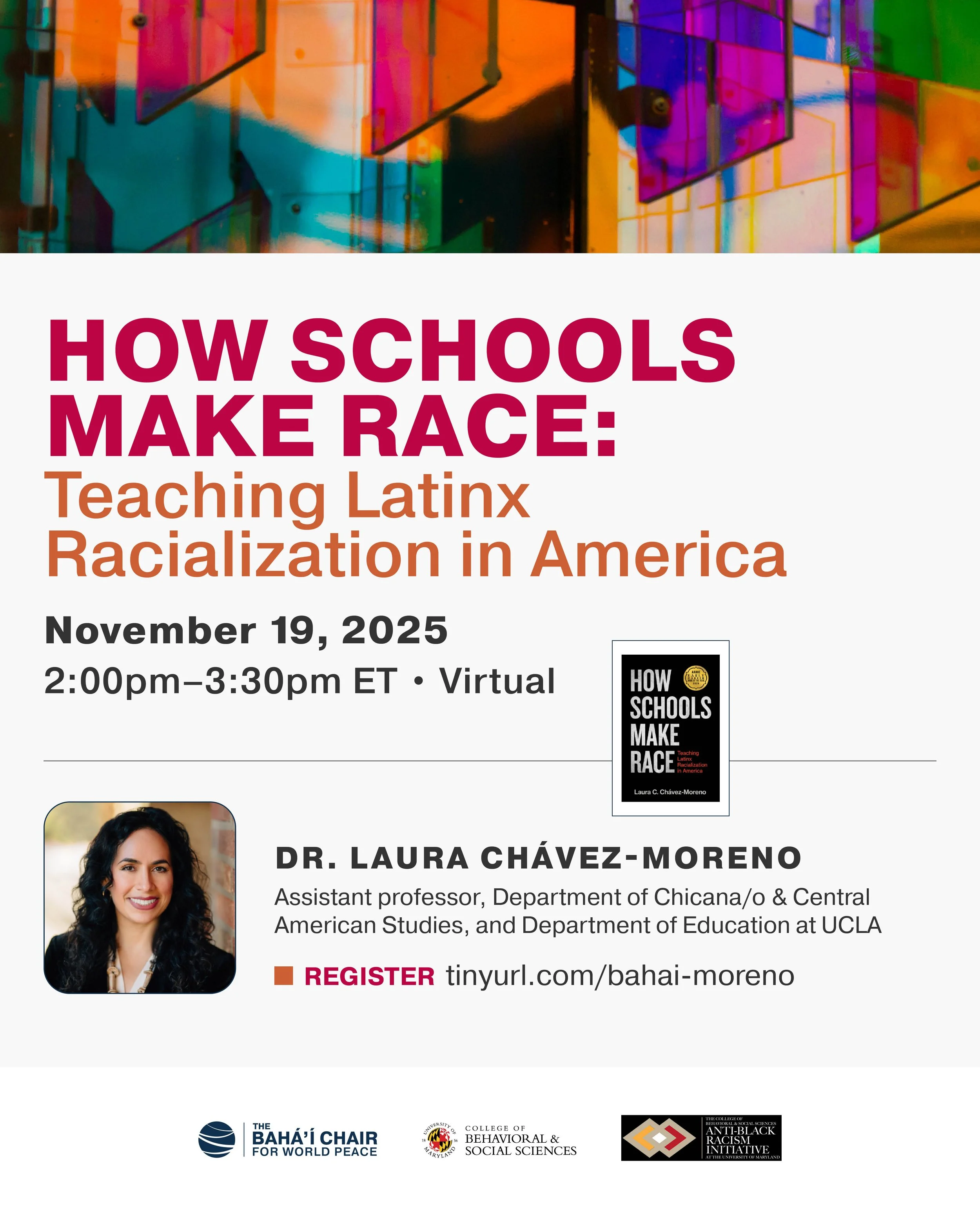
On November 19th, 2025, the Baha’i Chair for World Peace, in conjunction with the Anti-Black Racism Initiative, hosted a presentation from Dr. Laura Chávez-Moreno, a noted Professor from UCLA.
In her talk, Professor Chávez-Moreno walked the audience through the difficult themes and counterintuitive assertions of racialization in education – specifically how it impacts and shapes debates about race in Latino communities. Chávez-Moreno shared findings distilled from years of scholarship, specifically a project in which she embedded herself within a secondary school. During this time, Dr. Chávez-Moreno had nearly unfettered access to students, teachers, and administrators, and recorded teaching approaches, class discussions, and student reflections. She found that while most parties operated in good faith, the lessons learned, and even the lessons themselves, were often confusing, ahistorical, and lacked a modern, critical lens.
Professor Chávez-Moreno central approach was examining the ways in which Latino identities are rendered within notions of ethnicity, as opposed to race. While she doesn’t linger on the overall viability of race itself as a meaningful category, she does follow some of the unintended, downriver consequences of rendering a vast and heterogenous diaspora into a single ethnic group. Dr. Chávez-Moreno spoke at length about the contradictory elements of pedagogy that stress a kind of raceless togetherness while also constantly celebrating racial difference. A structure is therefore created which rewards race, while at the same time not allowing all – specifically Latino Americans – to receive said rewards. In her telling, young people could be forgiven for being slightly confused by the conflicting ideas, and implicit and explicit suggestions that smudge notions of race, culture, heritage, values, and norms. This difficult stew of race and ethnicity, she argued, must be deliberately untangled by able teachers and administrators.
Dr. Chávez -Moreno used many examples to show how the education racial landscape can be contradictory, discriminatory, and strange. One example she gave concerned a group of Hispanic students from Central America and a group of Afro-Latino students from the Dominican Republic and Puerto Rico. In a class discussion, tracing the lines of who was “black” and who was Latino made for a lively, if not always fully informed debate. Professor Chávez-Moreno went on to describe how the situation grows stranger still when the ‘Afro’ of Afro-Latino is inscribed with an almost axiomatic and foundational power while the ‘Latino’ of Afro-Latino is a looseleaf confederation of national histories, linguistic origins, cultural temperaments, and even local foodways.
As if high school weren’t already hard enough, Professor Chávez-Moreno unveils the painful irony and social confusion that can arise among good-hearted attempts to render helpful information about Latino accomplishment. Her ultimate argument concerned itself less with the validity of certain arguments and educational practices and more with the need to ensure clarity and coherence. Coherence matters, she argued, especially among teachers and administrators. As such, Dr. Chávez-Moreno encouraged teachers and administrators to learn the history, and then to challenge prevailing norms of racial classification. By viewing secondary education as a battlefield for ideas, epistemic transparency and educational responsibility become useful tools. For professor Chávez-Moreno, the racial classification system taught to students in America should be challenged and reimagined, and students should not just be viewed as passive receivers of history but as producers of history. Undoing the opaque, and even grotesque intellectual contradictions, historical assumptions, and pedagogical practices of racialization in education is an important battle, she told a worldwide audience, that demands serious change school by school, classroom by classroom.
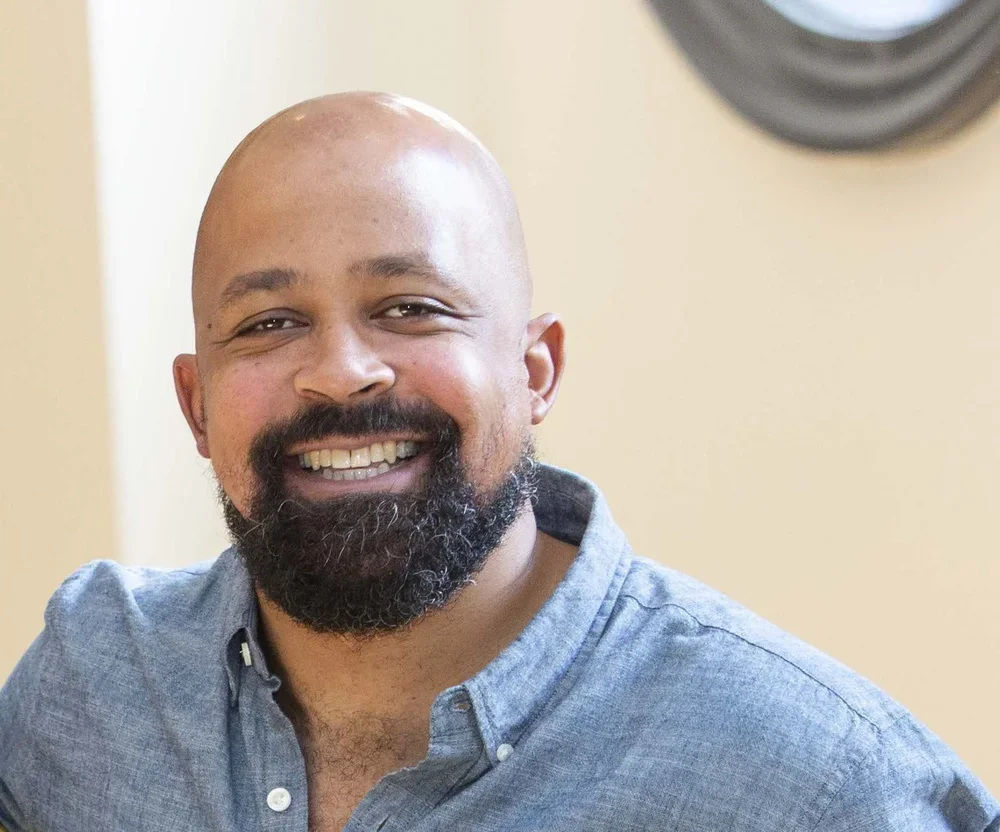
Malik Wilson is a Faculty Fellow at the Bahai Chair for World Peace at the University of Maryland. He works closely with Dr. Mahmoudi in matters relating to editorial concerns – publications, speeches, and publishing.