
Coming Up: Dr. Dorothy Roberts on Marriage and Hope
Embedded Scholarship
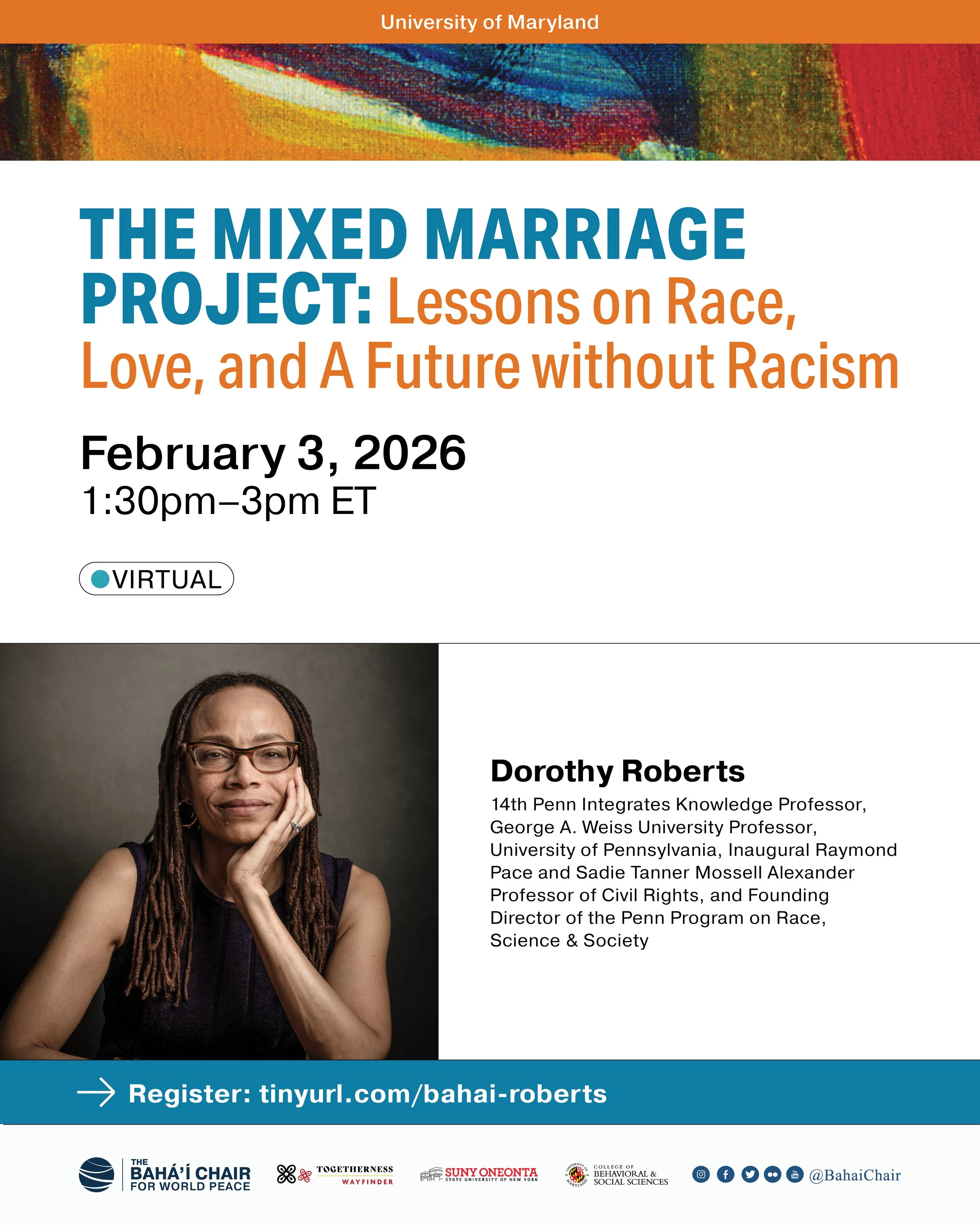
Our next event on February 3rd will host one of the more interesting scholars, and some of the most interesting scholarship we have hosted at the Chair. Dr. Dorothy Roberts, a 2023 MacArthur recipient, will present her latest book, The Mixed Marriage Project, an intimate and far-ranging assessment of racially mixed marriages.
It is rare in scholarship to have a research subject that is so deeply embedded in the author’s life. And it is rare to find a researcher, and a research subject, that better touches on the tangled notions of family, community, marriage, and cultural and racial sociology. In Dr. Robert’s case, these issues are not just abstract philosophical arguments, but touch on her own history in deeply intimate ways.
Of course, making one’s way thoughtfully through such a topic requires sensitivity, objectivity, and an analytical mind. But it also requires moral and creative dexterity, especially when linking scientific information with hard-to-examine family history. It is always difficult to perform one’s own research, but simultaneously evaluating research conducted by one’s family members makes the work even more challenging. And it must be more challenging still to conduct such research when the subject of said research explains one’s very existence.
Professor Robert’s scholarship examines not only the history of interracial marriage in America but the history of her own parents, an interracial couple in mid-century Chicago. But the story does not end there. The elder Dr. Roberts was a researcher himself, who studied interracial marriage alongside his wife, Professor Roberts’ mother. These thick cords of meaning, belief, action, argument, and philosophy will make for a truly compelling presentation.
In a world obsessed with the "meta" connections between the personal and professional, Professor Roberts shows us that some things truly are enmeshed within rich and multi-layered systems of history and civic and social possibility. These bracing, dizzying ideas require an able guide with a temperament of intellectual curiosity and epistemic humility. They also require a scholar willing and able to situate such historical developments within modern understandings. Dr. Roberts is eager to show how such issues are still relevant in America today, even as older notions of limits in marriage fall by the wayside. Her excellent scholarship, and fascinating story, will help to unearth the past while pointing to new possibilities in the future.
Marriage and Hope
In examining marriage in the past and marriage today, scholars like Dr. Roberts are unlocking not only fascinating sociological scholarship, but things more intimate and interesting – cartographies of intent, of value and purpose, motive and process, that help us understand individuals, families, and communities.
What Dr. Roberts is pressing into is the potential alleviation of the old restrictions, implicit and explicit, that defined American life for centuries. By unearthing how individuals, families, and communities made their way through these challenges, she is equipping us to do the same in our modern world. Today, where racial acceptance has grown by leaps and bounds, it is more important than ever to capture the balletic feats that men and women accomplished, and how they sought not just justice but beauty, not just equality but understanding.
The insistence to be able to love and engage in love’s most serious commitment – marriage – is a profoundly American urge. And because the covenant of marriage captures notions both practical and metaphysical, pragmatic and romantic, it can provide roadmaps to navigating the ancient philosophical tensions between freedom and responsibility, commitment and calling.
Marriage and family are arguments for a certain kind of future. To seek marriage is to engage in a stubborn kind of optimism, and the children marriage produces are new and compelling arguments for different futures, different possibilities. The children of mixed marriages can be viewed as powerful assertions of confidence, hope, faith, and love.
Capturing the internal and external meaning and purposes of marriage, family, and community is intricate work. Defining the elementary, elusive particles of patrimony and matrimony requires a kind of social physics, able to record the architecture of all that is closest to us. Framing this work within the broader social context of the day, and of the generations before, can provide us with rich information – even the richest information – that helps us harness our own hopeful intentions and desires.
We at the Chair, along with a worldwide audience, eagerly await Dr. Roberts’ findings from her decades-long research on interracial relationships - their possibilities, their limits, and what they say about the true nature of social change.
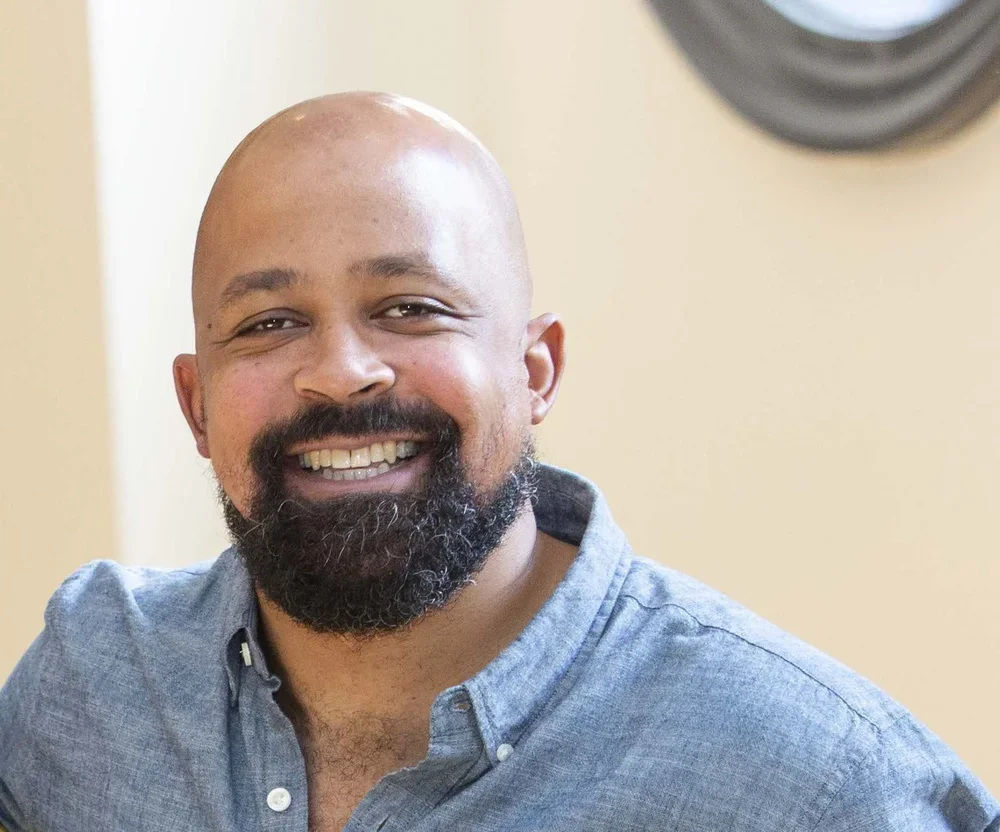
Malik Wilson is a Faculty Fellow at the Bahai Chair for World Peace at the University of Maryland. He works closely with Dr. Mahmoudi in matters relating to editorial concerns – publications, speeches, and publishing.