
Professor Charlotte Ku: Fragmented Responsibility in a Global World
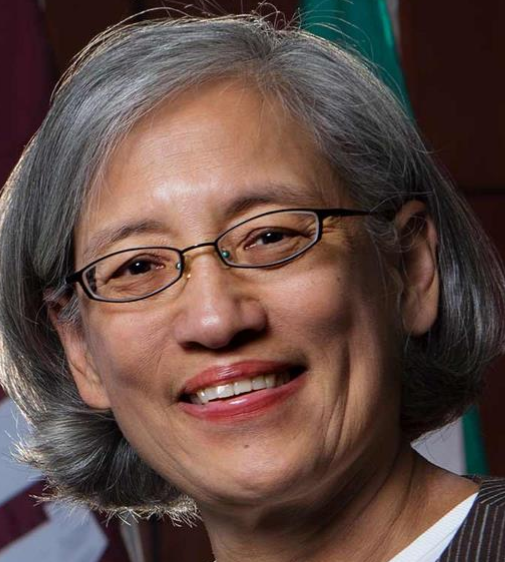
During a time of war and upheaval, Professor Charlotte Ku’s nuanced analysis of the current global governance system presents both warnings and encouragement, historical lessons and contemporary advice. She reveals a global order both calcified and modifiable, one steeped in older approaches but also containing vital levers of change. Above all, her healthy, visionary approach puts the onus on us, and reveals a world, and a system, that is challenging but changeable.
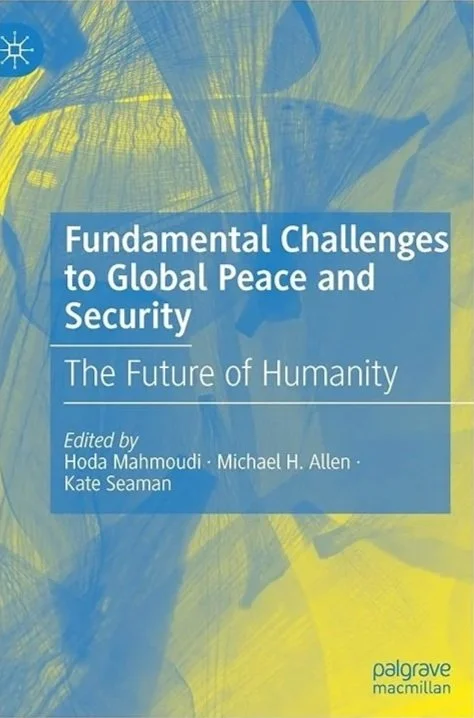
From her perspective as a scholar in international law, Professor Ku presents a fascinating overview of the history and doctrine of state responsibility. In her 2018 presentation at the Baha’i Chair’s “Fundamental Challenges to Global Peace and Security: The Future of Humanity” conference, and in her chapter in the edited volume of the same name, Ku describes where our current global system is, how it arrived there, and how it can be changed.
Ku begins her analysis by describing the history of the rise of state power and authority during the 17th century, and how ove the following centuries, the focus was on intimate and elaborate relationships between states. As such, a state’s internal politics and behaviors, as long as they did not touch on the concerns of sovereign nationals or cultural relatives, were largely considered off-limits. This presages her later consideration of what she views as one of the most significant and desired changes to occur within our global system – the shift to value-based considerations and governance behaviors within nations.
Ku locates the impetus for such changes in a rapidly changing world, a world which has steadily grown in complexity and interdependence. And she reminds the audience that such changes are not new. Rather, elaborate and multi-valent state interactions were occurring long before our post-modern moment of hyper-globalization. She notes a telling statistic in which of the nearly 6,000 multi-lateral, intra-state treaties now extant, less than 10% were in place before 1800.
Ku goes on to show how ironically, it is the very increase in connectivity which has decentralized the touch points and pressure points between states, which largely used to flow through a codified system that had changed little in centuries. She painstakingly shows how increased globalization makes alignment more challenging, institution-building more difficult, and collaboration more complex. Ku refers to this as the “thickening system of global responsibility” and “a dense, thick, and multi-layered phenomenon.”
Interestingly, it is not a system that has evolved happenstance, but through human decisions, including many decisions to seek order and pursue a more peaceful world. Ku walks the reader through the dizzying array of attempted global institutional and extra-state actors like the League of Nations and the United Nations, as well as the hundreds, indeed thousands of non-governmental private actors, cultural and tribal associations, and even asymmetric quasi-militias. She notes, intriguingly, how the 20th century’s shift towards states’ internal behaviors was a key factor in the United States not joining the League of Nations, and later, its refusal to join the International Criminal Court. Stubborn nations of sovereignty, particularly legal questions concerning a nation’s citizens, also factored largely in the successful Brexit campaign in 2020. It is perhaps not surprising that both the UK and America, with their long history of rebellious individualism, have rejected certain expansions into the notion of collaborative sovereignties.
One of Professor Ku’s most salient, and encouraging points is the way she describes large, multi-national groups like the League of Nations and the United Nations. As she stated during her talk at the Chair, “with international institutions we think about all the things that are wrong about it but we don't spend enough time perhaps thinking about some of the things that are right.”
For though we often see them as failures, Ku reminds us that it is these groups which help introduce notions of shared moral conformity, and suggest potential limits of state sovereignty.
In the case of the United Nations, its charters place not only the right but the responsibility to act independently of member nations. Such a notion implies not only moral responsibility but legal responsibility, and in some cases, the UN has been sued by member governments and private institutions for its failures to intervene, or for intervening in unhelpful ways.
But though non-state actors are increasingly important, Professor Ku draws us back to the still-powerful heritage of state actors. For while the world is changing rapidly, and new, extra-governmental institutions and groups take the stage, Ku reminds us that the state remains “the single most organized and recognized global actor and unit.” In ways that confirm what we see in the world today, non-state actors and individuals and groups may assert influence but are not fully able to stop the actions of a sovereign state.
In lieu of this, Ku focuses on what she refers to as state responsibility. Against the backdrop of our diffuse, examine-all-sides-of-the-coin, democratic age, there can simultaneously seem to be no one and everyone in charge. The result is a kind of malaise that calls out for powerful figures and invigorated states. Indeed, today’s world system can feel foisted and sculpted into place, for purposes lost to time, producing an ongoing stalemate of intellectual, political, and social bounds.
But Professor Ku reminds us that not only was this not always so, it needn’t be so now. For in her telling, if states began to view themselves differently, asserting new forms of authority and responsibility, the world can indeed change significantly.
She shows how this is possible by zeroing in on a single thread, a single emergent ideal. In so doing, Professor Ku shows how the monolithic, leviathan ideal of state sovereignty, which has seemingly been locked into hardened routine, is in fact, vulnerable, and can be nudged forward. This idea, introduced by the International Commission on Intervention and State Sovereignty nearly 25 years ago, advances the notion that every state bears a “responsibility to protect”, that is, states carry an indissoluble remit to protect their own citizens from natural and man-made disasters and strife.
While such a notion seems simple enough, Ku painstakingly shows how this very ideal contains the seeds of undoing for the sovereign state’s unchecked independence. She shows that by linking state sovereignty to state protection, the notion of total, unquestioned national sovereignty is pushed to the side. Instead of being an axiomatic truth that must be accepted, state sovereignty is now indexed to globally accepted notions of behavior, a significant change from past notions.
By focusing on a state’s role to its citizens, empire-building, saber-rattling, and score-settling between states can diminish as nations look to the betterment of their own citizens.
Professor Ku states that in:
“A complex environment of shared responsibility and accountability, governance relationships will need to more closely mirror the world that we are in, linking private individual actions and capacities to public ones at both the domestic and international levels.”
Such a vision of unity between the individual and the state, and between inter and intra-state actors, reveals a world more harmonious than our own – one capable of achieving peace. By focusing on increased moral responsibility and accountability, Professor Ku provides an inkling of how state sovereignty can be adjusted – and is being adjusted – to better meet the needs of a changing world. Her recipe and analysis provide hope for all those who desire to see a more peaceful world.
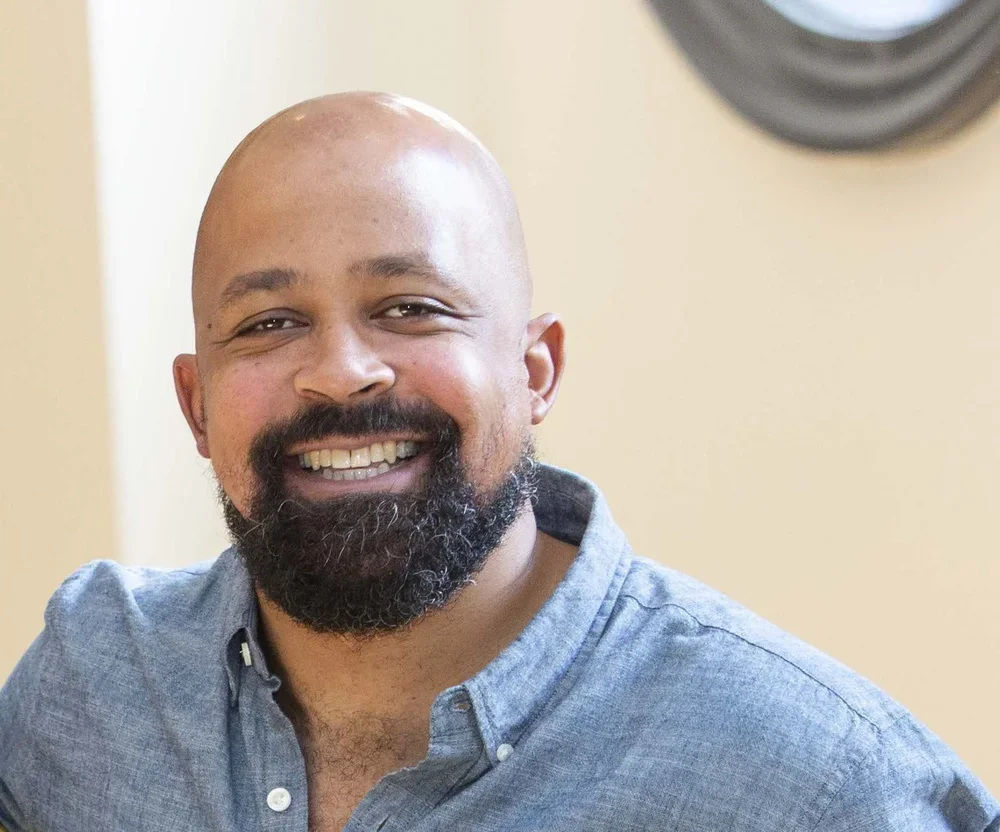
Malik Wilson is a Faculty Fellow at the Bahai Chair for World Peace at the University of Maryland. He works closely with Dr. Mahmoudi in matters relating to editorial concerns – publications, speeches, and publishing.