
Multiculturalism and Building Peace Roundtable: Lessons from Five Nations
On a lovely evening in the nation’s capital, the Baha’i Chair for World Peace at the University of Maryland hosted “Multiculturalism and Building Peace Roundtable: Lessons from Five Nations”, a remarkable event of learning, listening, and insight from the front lines of national and international peacebuilding.
Held at the venerable Library of Congress, a sense of peaceful possibility, of liberty with purpose, pervaded the atmosphere. Dr. Hoda Mahmoudi, holder of the Baha’i Chair, spoke to this ideal as she greeted the crowd of hundreds. She reminded the audience that they were in “a place dedicated to knowledge, dialogue, and the preservation of humanity's shared intellectual and cultural heritage.”
The event was helmed by Dr. Katrina Lantos Swett, who also framed the gathering as dedicated to the ongoing improvement of humanity. Dr. Lantos Swett spoke of the particular timeliness of the event (originally scheduled for Fall 2025), and how its message of unity, cultural understanding, and national and international dedication to diversity and societal peace was now more relevant than ever.
The daughter of a Holocaust survivor, Dr. Lantos Swett’s work as chair of the U.S. Commission on International Religious Freedom resonated deeply. She reminded the audience that the work of unity and mutual acceptance is not simply an academic exercise, but a matter of life and death.
Dr. Lantos Swett spoke with particular eloquence about the efforts of the Baha’i Community, and her experience working with and among this community.
Whenever I have the opportunity to participate in any event organized or associated with the Baha’i community, I jump at it… In both their theology and even more importantly in the way they live their lives, they truly embrace and embody and reflect the spirit of universal respect, love, inclusion, and unity. They somehow manage to embody that old phrase of being their brother’s and sister’s keepers.
As leaders from various nations took the shared stage, the sight of national leaders devoted to solving their country’s knottiest challenges was powerful.
But such sensations also were confronted by real world challenges, and the eclectic gathering was not free from global dangers. As war with Iran continued, the ambassadors from Bahrain and Azerbaijan were called away – both countries were facing what one speaker described as “existential challenges.”
Sahib Naghiyev, Deputy Head of the State Committee for the Work with Religious Organizations and representative from Azerbaijan, was the first speaker. He talked of his country’s long commitment to religious pluralism, noting that Azerbaijan had been a refuge for Jewish, Christian, and Muslim communities for centuries. But he also spoke candidly of his country’s current difficulties. With the specter of war hovering nearby, Mr. Naghiyev reminded the audience that:
The current configuration of international relations compels us to recognize that the coexistence of diverse nations, languages, and cultures, and religions is no longer a choice but a necessity.
Yet even with war at his doorstep, Mr. Naghiyev discussed the recent successes of peace, including the American-brokered settlement between Azerbaijan and Armenia, who had been in conflict for centuries.
He reminded those gathered that “peace is not merely the absence of war but the presence of justice, the protection of human rights, and the establishment of social harmony within a society”, echoing a theme that guides the Baha’i Chair’s efforts.
The next speaker represented Bahrain. Though Bahrain’s ambassador, the honorable Shaikh Abdulla Rashed Al Khalifa, was unable to attend, the country was represented by friend-of-the Chair and accomplished business and government advisor Dr. Sohrab Sohbani. Describing Bahrain as a small country with a big heart, he told a story of a visit to Bahrain’s Museum of the Quran, where he viewed hand-woven carpets from around the world. He noted that the Ambassador wanted to convey that this diversity of construction and appearance “represents this fabric that unites us all together as humans.”
One of the most poignant moments of the evening came during the next presentation, from Cambodia’s Deputy Chief of Mission Socheat Oum. Mr. Oum gave a personal, intimate reminder of what happens when peace is not achieved. Describing his own country’s decades-long war, he spoke of the deaths of his own father and 6 of his aunts by the Khmer Rouge. The sight of the buoyant, dedicated minister, extolling the virtues of collaboration and consideration, despite such a background was truly inspiring.
In another powerful contrast, Mr. Oum described how during the war, Cambodia hosted U.N. Peacekeepers, but now, in the absence of war, it sends U.N. Peacekeepers to other parts of the world. He also explained the iterative process for how Cambodia was able to become a peace-seeking, peacemaking country.
Through peace at home, we build and develop respect for human rights. Then they are inseparable, because you cannot eliminate direct violence, structural violence, cultural violence, without human rights. You cannot have peacebuilding without a stable society. That's all we needed.
Next up was Mr. Bartholomew Lumbasi, Education Attache from the Embassy of Kenya. Mr. Lumbasi spoke of his country’s rich cultural history and its location as a provider for leadership in Africa and throughout the world. He also described how the effort to frame peace must be holistic and ongoing, and must be structured and passed on to the next generation.
How can you bring up a holistic person, right from childhood, to be able to embrace peace? We ensure that this is embedded within our curriculum, ensuring that the children acquire the right values so that they can coexist peacefully, and also be able to resolve conflicts in an amicable way.
Mr. Lumbasi also spoke of the needlessness of religious discrimination, framing it as an issue of profound spiritual importance.
There's nobody who owns God and the way you perceive God should not be an inhibitor to another person... So if we all believe we are created by God, then you only need to reflect on yourself and if you have internal peace then you will be at peace with yourself, you'll be at peace with your neighbor, and you'll be at peace with your God.
The evening was summed up by Reverend Johnnie Moore, who has worked on behalf of persecuted religious groups around the world. Dr. Moore challenged the audience to not see the evening’s events as feel-good tales but as challenges, as calls to action.
The nations represented here and what they've conveyed to you here tonight, are not presenting us with theories. They're presenting us with commitments that they have made and are making. And some commitments come at a very great cost – and the conviction that diversity and multiculturalism, managed with wisdom and genuine goodwill can become not a source of fragmentation but resilience. That is not a comfortable thesis in this particular moment in history. It is a countercultural one and that is precisely what makes it worth taking seriously.
The Baha’i Chair for World Peace at the University of Maryland’s event, “Multiculturalism and Building Peace Roundtable: Lessons from Five Nations”, framed and presented such a countercultural assertion – that the achievement of peace is not only possible, it can be accomplished. The nations assembled for the event reminded the audience, and the world, that peace is indeed possible, if only there is the resolve, the fortitude, and the willingness to do the hard work of building a better world
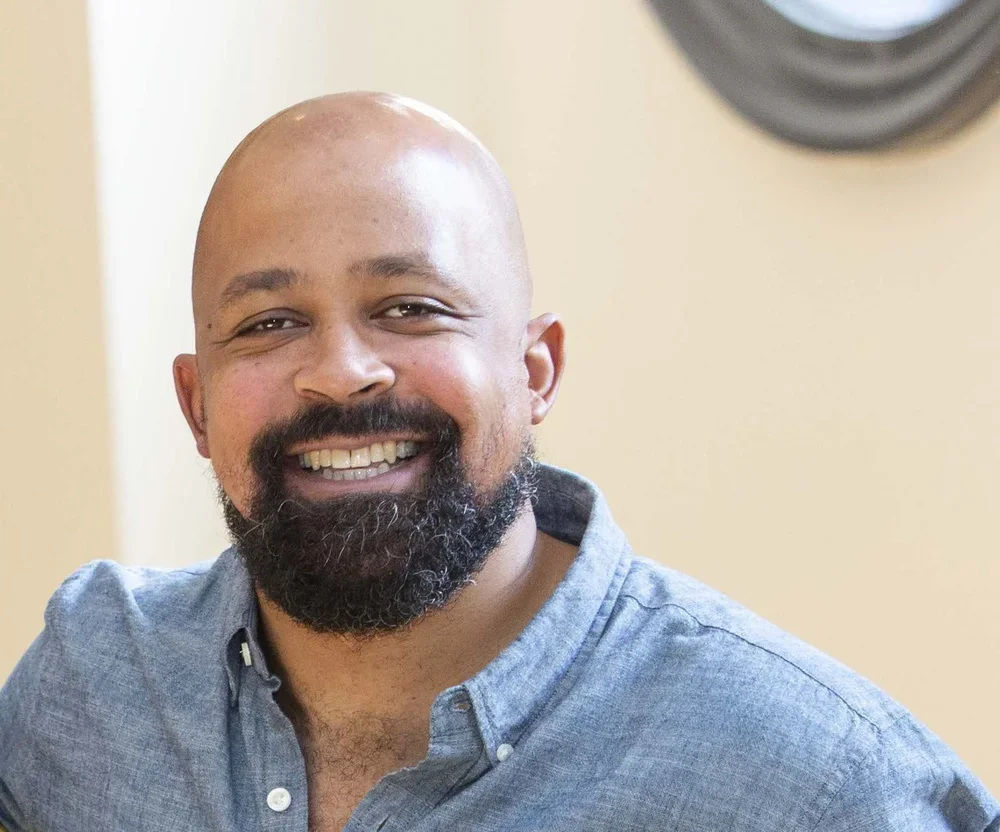
Malik Wilson is a Faculty Fellow at the Bahai Chair for World Peace at the University of Maryland. He works closely with Dr. Mahmoudi in matters relating to editorial concerns – publications, speeches, and publishing.