
Understanding Digital Conflict Drivers: Rethinking Peacebuilding for a Digital Age
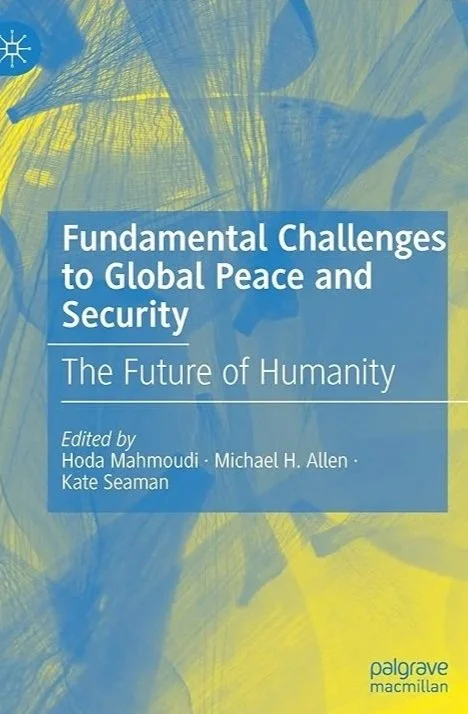
“Understanding Digital Conflict Drivers” in the volume, Fundamental Challenges to Global Peace and Security: The Future of Humanity, reorients the reader to modern issues of peacebuilding by making the bold assertion that digital platforms shape not only our interactions but our sense of ourselves and others. In such a world, the authors note, peacemaking strategies must not only be updated, they must be reconsidered, retrofitted, and reimagined.
Professors Larrauri and Morrison argue that in a fully digital age, it isn’t enough to offer ad-hoc solutions or treat emerging technologies as an ingredient to be added later. Rather, digital peacebuilding must be regarded as essential as “on-the-ground” peacebuilding. The authors argue persuasively that digital realities have in some ways become the predicate that leads to ‘real’ human interaction in the world. Such a change presents both opportunity and danger, and increases the impact - both positive and negative - that individuals, communities, societies and nations can have.
The authors reject the sometimes-true argument that technologies are themselves ‘neutral’ – that is to say, technologies are what we make of them. For instance, the technology of a pen was used to write a Shakespeare sonnet, a shopping list, and Hitler’s Mein Kampf. Does the pen bear an insightful input, much less a good or evil one? Certainly not. What matters is the intent, motive, and practice of the hand that holds it.
But Larrauri and Morrison complicate this picture. They offer a vision of digital technologies that focuses on not only the vectors of technology but also their ontological impact. That is to say, the rise of new technologies is profoundly impacting the way in which we see ourselves, the world, and our place in it. Far from ‘neutral’, digital technologies are shaping the world – and shaping us – in ways that call for analysis, discussion, investigation, and exploration. Or as the authors say, “technology is not just a tool that can be used to fuel the flames of violence or to dampen them… Instead, technology should be considered an integral part of the context in which conflicts occur.”
The authors seek to explore the complexity of these contexts by crafting a “framework for peacebuilders” – integrative, collaborative, considered approaches with declared purposes, principles, and practices. They divide these approaches into three interrelated areas deeply shaped by technology –communications, data management, and networking.
For the authors, communications are “in many ways an opportunity for peacebuilding – from understanding what is happening on the ground as it happens, to diffusing messages that can mitigate or prevent conflict and building campaigns calling for peace.” But communications also ratchet up the potential for divisiveness and isolation, even for violent conflict. The authors focus on hate speech, misinformation, and disinformation as the greatest contributors to communicative digital conflict
Data management is another key lever in helping us to understand digital conflict drivers. Describing an “Industrial Revolution of Data” – the organizing, archiving, distribution, and leveraging of ever-more complex points of data about individuals, families, communities, and nations – they make it clear how data management presents ripe possibilities for mismanagement and ill intent.
Larrauri and Morrison’s discussion brings to mind the famous – or infamous – University of Cambridge study from 2015, which asserted that an algorithm with only 30 data points was better able to predict a person’s likes or interests than his or her spouse. The authors advance this notion when they assert that algorithms “make decisions about what information we are presented, thus nudging and influencing our choices, opinions and behaviours. This alters our experience of reality and can, in a conflict context, alter the dynamics of a given conflict.” Data management dynamics are further organized around the realities of algorithmic profiling, deliberate targeting, and surveillance, forming a world that feels smaller, tighter, and more controlled.
Finally, Drs. Larrauri and Morrison describe networking, or the controlled lanes, lines, and spaces in which technology is enacted. Networking is in turn influenced by affective polarization, or the “set of behaviors and actions, intended and unintended, that drive people with different perspectives further and further apart.” Online identity construction and recruitment are the other key items which cloud the networking tunnel and push us to divisive ends.
But after insightfully sketching out the ways in which rapid technologization has produced a concomitant increase in conflict and division, the authors turn to a series of suggestions about how to ameliorate such challenges – and how to stop new ones. While there is no quick fix, the seriousness of the problem is reflected in their multi-layered, multi-faceted, all-hands-on-deck approach.
The authors describe a tri-level, pyramid-like approach that considers all the ways human beings process ideas, socially collaborate, and arrive at conclusions. Profs. Larrauri and Morrison begin by insisting upon hate speech monitoring and online content moderation, including countering activities and privacy education. They then lay out a plan for debunking disinformation, integrating social media into peace agreements, and the crafting of social cohesion campaigns. Lastly, the authors counsel that combatting misinformation, enacting policy responses, teaching digital literacy, launching depolarization efforts, and redesigning and countering algorithms are all steps that must take place if individuals, communities, and nations are to create peaceful digital pathways.
Professors Larrauri and Morrison end their important essay by reminding the reader of the unique context of today’s conflicts, stating that “in our increasingly interconnected world, the distinction between online and offline elements of a conflict is no longer clear.” Because of this, understanding – from the inside out – digital technologies is critical to the success of all humanity, and is a responsibility all individuals share.
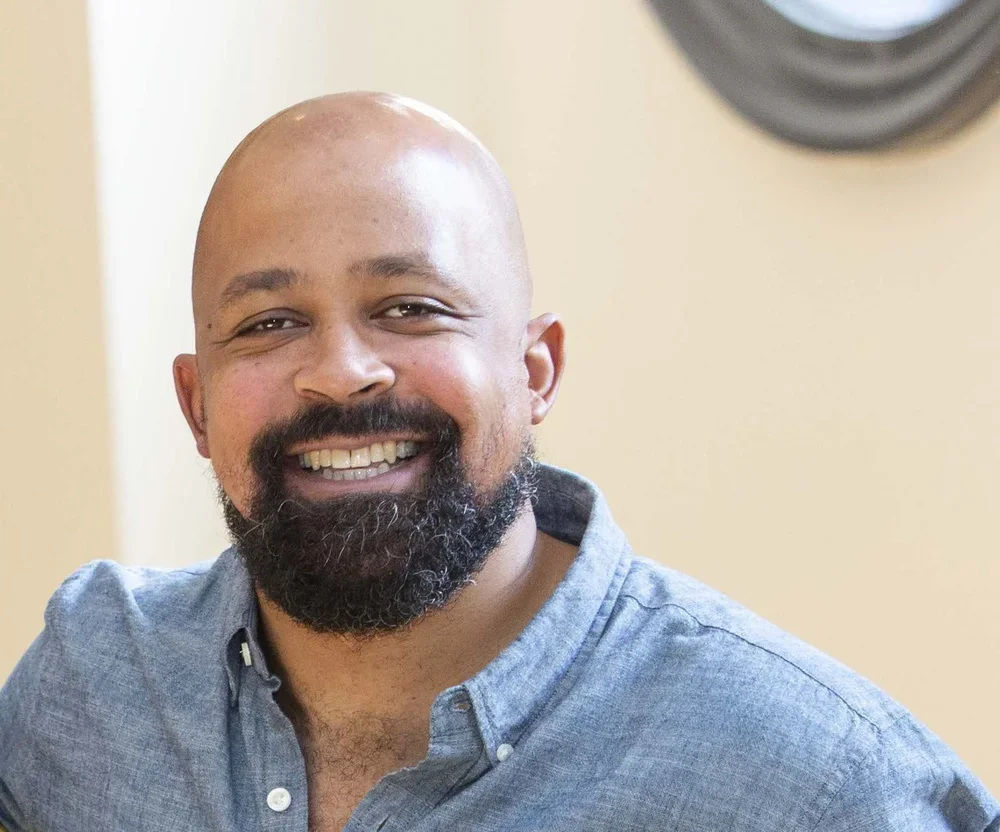
Malik Wilson is a Faculty Fellow at the Bahai Chair for World Peace at the University of Maryland. He works closely with Dr. Mahmoudi in matters relating to editorial concerns – publications, speeches, and publishing.