
The Lasting Impact of Urban Planning on Black Communities
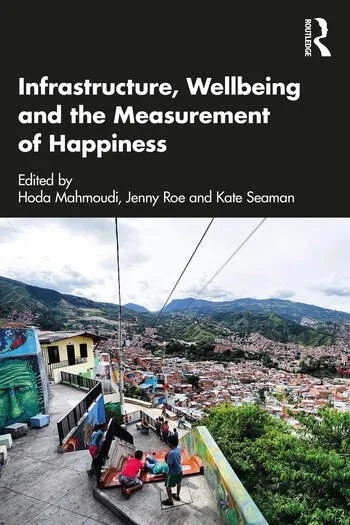
June Manning Thomas’s “Racism and US Urban Planning” chapter in the Infrastructure, Wellbeing, and the Measurement of Happiness volume details both the impact and fraught legacy of urban planning, particularly how it has impacted African American neighborhoods. A professor emerita of Urban and Regional Planning at the University of Michigan, Thomas brings more than four decades of experience to the subject and is the author of numerous books about the history of urban planning, particularly in Detroit, Michigan. That city’s legacy of successes and failures, especially around issues of race and class, helps tell the broader, harrowing story of loss and missed opportunity that characterizes African American urban history in postwar America.
Thomas begins her chapter by painstakingly reviewing the history of American urban planning in the 1960s and beyond. It is a legacy of both good and ill-intentions, sometimes within the same projects, that has shaped the reality of urban centers across the country. She details how even well-intentioned programs have destabilized existing neighborhoods in their efforts to provide new forms of housing, with particular impacts on African American communities. She explains that how we define the good life – what the philosopher Aristotle called human flourishing – shapes the downriver projects that determine how human communities are organized. After shepherding the reader through some of the more explicit, historical forms of discrimination, Thomas shows how subtler forms of modern exclusion, including zoning, continues to give city planners the ability to shape communities after their own values.
Generally, Thomas distinguishes between formal and informal means of discrimination – the former being a kind of planned collusion at the local, state, and federal levels, while the latter functions as a kind of unplanned pressure on Black communities to remain in place. Formal discrimination includes practices like redlining, which limited expansion based on economic determinants, while informal discrimination included the impact of mobs, neighborhood groups, realtors, and families.
And while much of this history has been told before, including in Thomas’ own scholarship, what makes this chapter an interesting and important contribution is its focus on human flourishing. For in documenting the failures of urban planning, Thomas is careful to show how the impact goes far beyond the material. Her research and insight show how the way our cities are constructed shapes an individual’s, and a community’s, sense of itself. Thomas reveals how city planning is more than central planning, it is human planning that shapes the experiences of possibility, growth, stability, liberty, and beauty.
But while human flourishing can seem like a nebulous term, Thomas shows it to be a practical ideal. She breaks the concept down into three constituent parts: life satisfaction, physical and mental health, and social relationships. Immediately, the reader can sense both the art and science of these terms. Life satisfaction for instance, isn’t solely determined by a beautiful neighborhood, but urban planners make decisions that shape citizens’ experiences for good or ill. Physical and mental health can also be shaped by a community’s walkability, small businesses, and the presence or absence of crime. And while social relationships can be muted or made distant even in suburban neighborhoods, they can be rendered fractious in poorly considered dense urban environments.
Most broadly, Thomas’ scholarship gets at what the very nature of planning should entail. Gesturing beyond the limited scope of urban planning, Thomas shows how all human planning must consider just that – humans. Planners must be considerate of what happened before, what is happening now, and what can happen in the future. Honesty about what happened before considers justice and inclusion, while a scientific eye on what is happening now brings a seriousness and devotion of purpose to complex challenges. Planning for a better tomorrow for all humanity unites the past and present in a hopeful gesture towards the future.
All told, “Racism and US Urban Planning” goes a long way in showing the reader how a sober, cognizant, and collaborate approach to urban planning is necessary for the betterment of humanity. Professor Thomas shows how humility, considered patience, and a bold faith in humanity’s future are necessary for justice and equality in our nation’s cities.
Malik Wilson is a Faculty Fellow at the Bahai Chair for World Peace at the University of Maryland. He works closely with Dr. Mahmoudi in matters relating to editorial concerns – publications, speeches, and publishing.