
Language and Conflict Panel – Reflection
By Alayna Brandolini
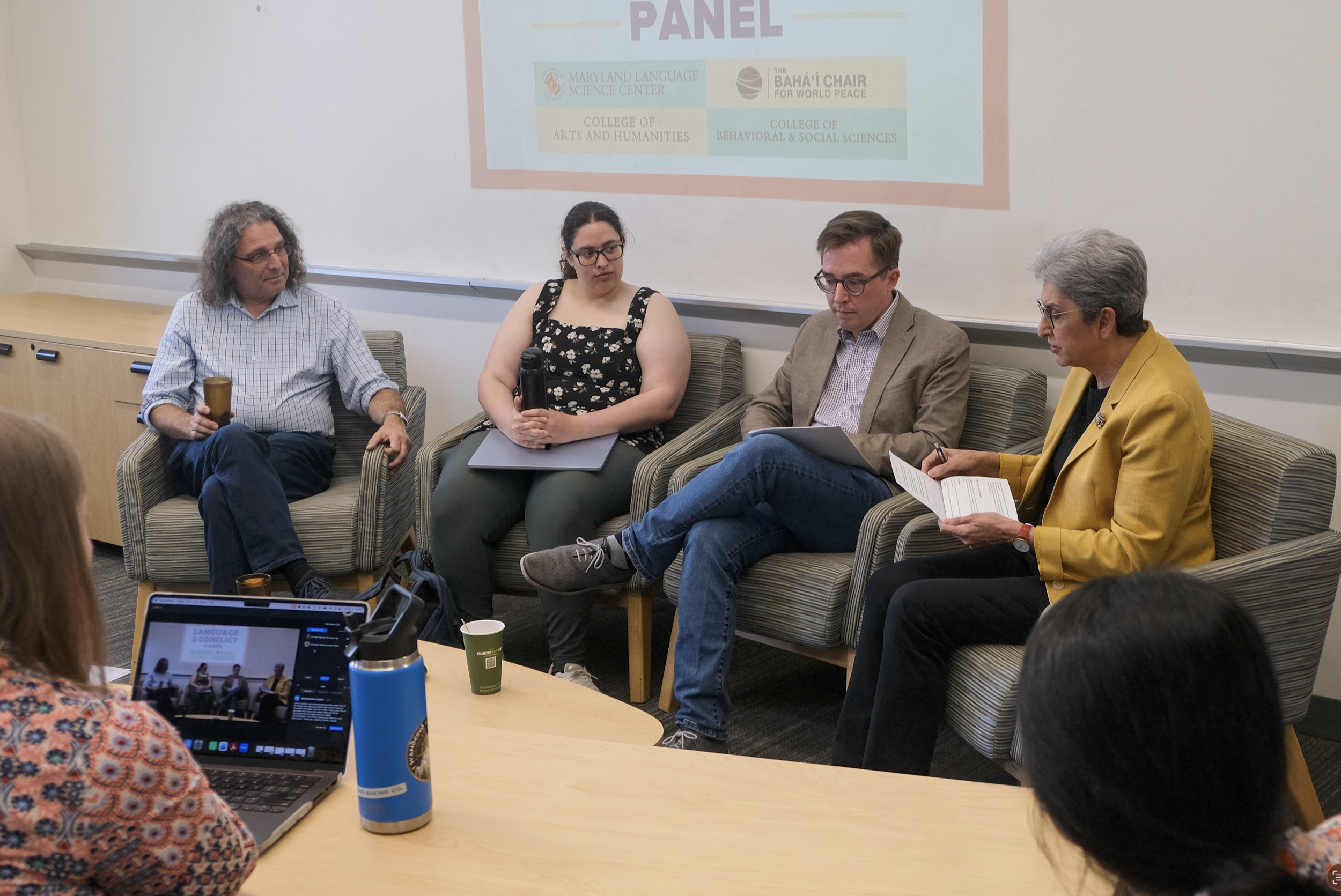
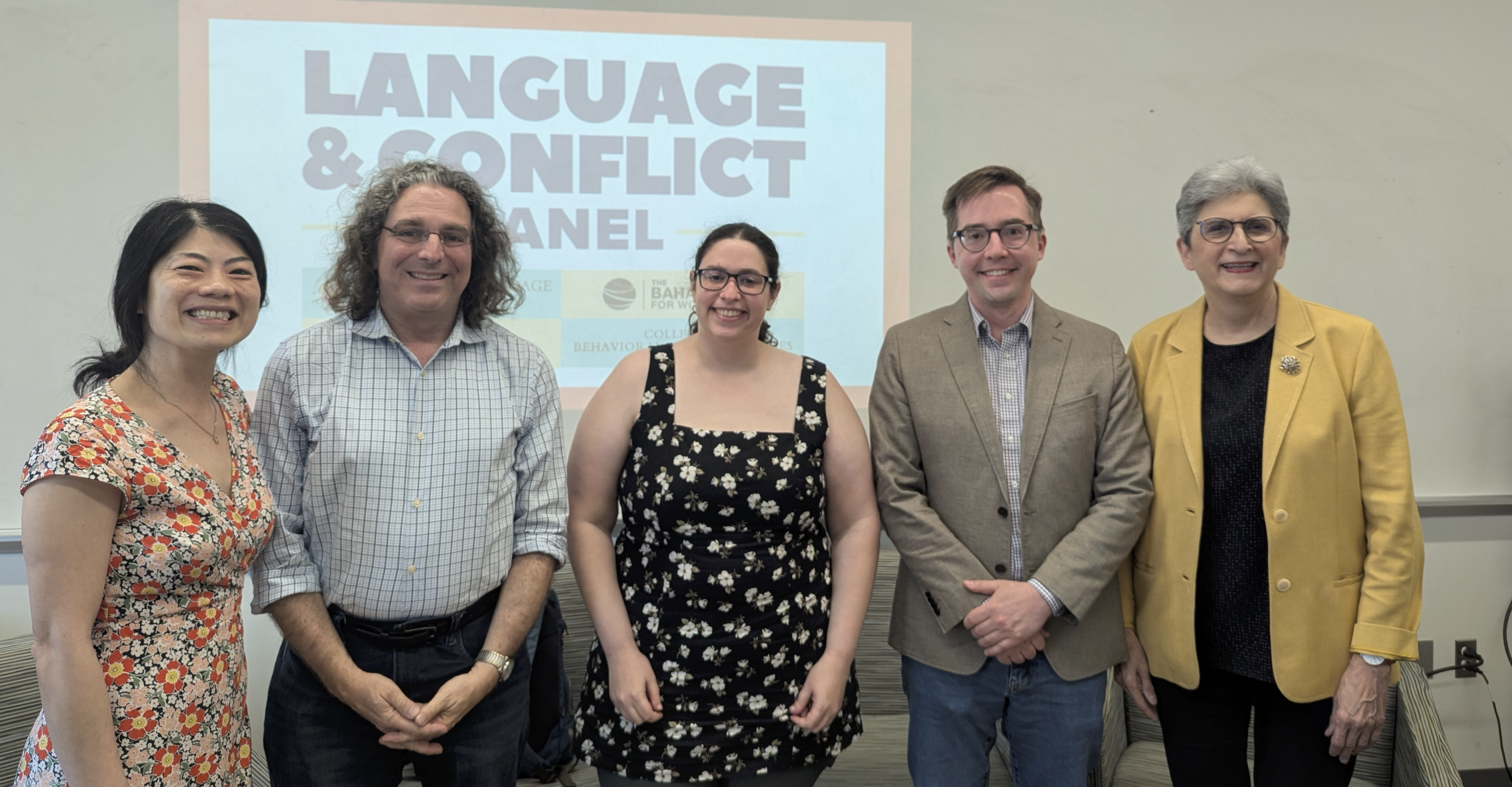
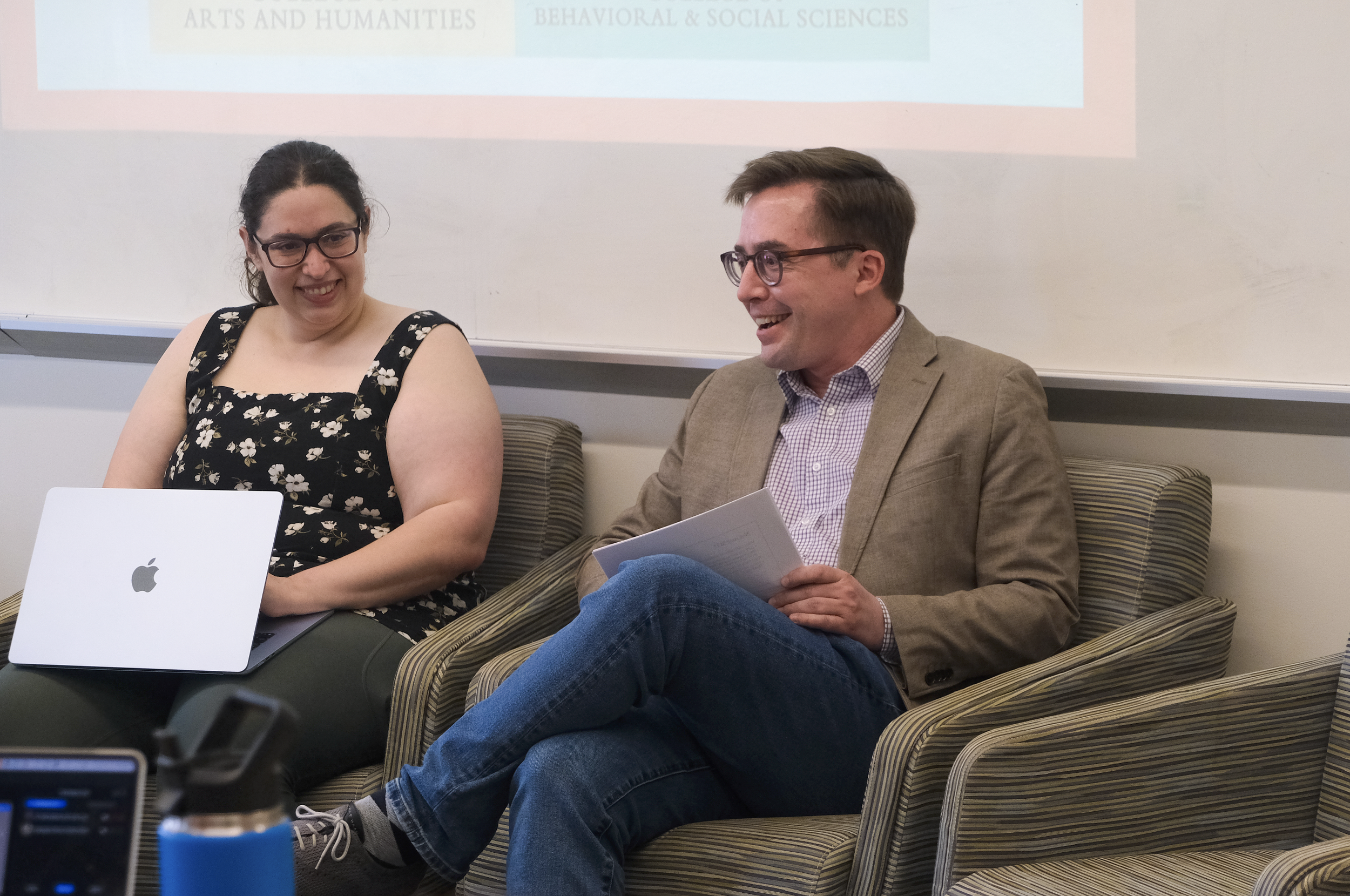
On Thursday, April 16, the University of Maryland’s Language Science Center, the Bahá’í Chair for World Peace, and the College of Behavioral and Social Sciences hosted a panel discussion on language and conflict.
The event featured three panelists: Philip Resnik, professor in the Department of Linguistics and the Institute for Advanced Computer Studies; Julia Mendelsohn, assistant professor in the College of Information; and Erik Nesse, researcher at the UMD Applied Research Lab for Intelligence and Security (ARLIS).
Language has an incredible impact on the way our minds process information. The way a sentence is phrased and the contexts in which it is understood can drastically change the meaning and effect. This is why language is such a powerful tool in dividing and uniting people, and in both initiating conflict and building peace. The panelists offered expert insight into how language can be used to spark or avoid conflict.
Philip Resnik, a computational linguist with over 35 years of experience in language processing and text analytics, began the discussion by posing a hypothetical situation to the audience:
“Imagine there is a courtroom where there is a Mr. Smith on trial,” Resnik instructed the audience.
“One of the lawyers says, ‘Mr. Smith’s car veered onto a crowded sidewalk, resulting in three deaths.’ The other lawyer says, ‘Mr. Smith veered his car onto a crowded sidewalk, killing three people.’ You know which one is the prosecutor and which is the defense, right?”
This simple example perfectly illustrated the concept of syntactic framing in language, which Resnik defined as emphasizing or de-emphasizing certain factors to intentionally influence a person’s understanding of the information presented to them. Syntactic framing can be used to encourage a person to take a certain side of an issue, therefore exacerbating conflict.
Julia Mendelsohn, a researcher and assistant professor specializing in natural language processing, computational social science, and sociolinguistics, continued the discussion by shifting to the framing of language online.
Mendelsohn emphasized how language is used to categorize and dehumanize groups through metaphors, relying on a shared understanding of the language to have the intended impact. For example, Mendelsohn referred to the use of water metaphors when discussing immigration. Describing immigrants as “flooding” or “pouring” into an area dehumanizes the group and characterizes immigration as an uncontrollable and potentially dangerous force, such as water.
Conversely, the use of dogwhistles, a term or phrase that has a different meaning to the ingroup than the outgroup, thrives on a lack of common ground and understanding. Dogwhistles can be used to initiate conflict or harm without arousing suspicion from the outgroup, thus lending the ingroup plausible deniability. Mendelsohn explained that language and conflict researchers must keep up with the ever-emerging online dogwhistles, because they lose power as shared knowledge grows.
Focusing on a more security-aligned framework, Erik Nesse, an ARLIS research specialist, discussed the dangers of over-reliance on machine translation. Nesse characterized effective communication as an unparalleled method of conflict prevention in diplomatic and international relations settings, and stressed that machine translation abilities cannot replace real human communication. Nesse warned against dismissing the importance of foreign language and literature, and encouraged those in all fields to continue building intercultural communication and foreign language skills.
All three panelists discussed the importance of critical analysis when presented with information, especially online. Mendelsohn noted that a lack of infrastructure can often discourage the use of trustworthy news sources and result in an over-reliance on social media as a source of information. Mendelsohn and Nesse both emphasized that understanding one’s own reactions to narratives and framing is key to being an informed consumer of media.
The Language and Conflict Panel, presented by the University of Maryland Language Science Center, the Bahá’í Chair for World Peace, and the College of Behavioral and Social Sciences, addressed a multitude of ways that language is used to both initiate and mitigate conflict on an interpersonal, digital, and global scale.